
International Astronomy Day
Bringing astronomy to the class, rather than the class to the sky.
- Dates
- Spring - the date moves each year
- Key stages
- EYFS - KS2
- Session length
- 45 - 60 minutes
- Formats
- Up to 6 sessions a day
About this date
International Astronomy Day was started in 1973 to bring astronomy to the public rather than expecting the public to come to it. That is exactly the problem a primary school has with space: the subject is in the sky at night, and the class is in the hall during the day.
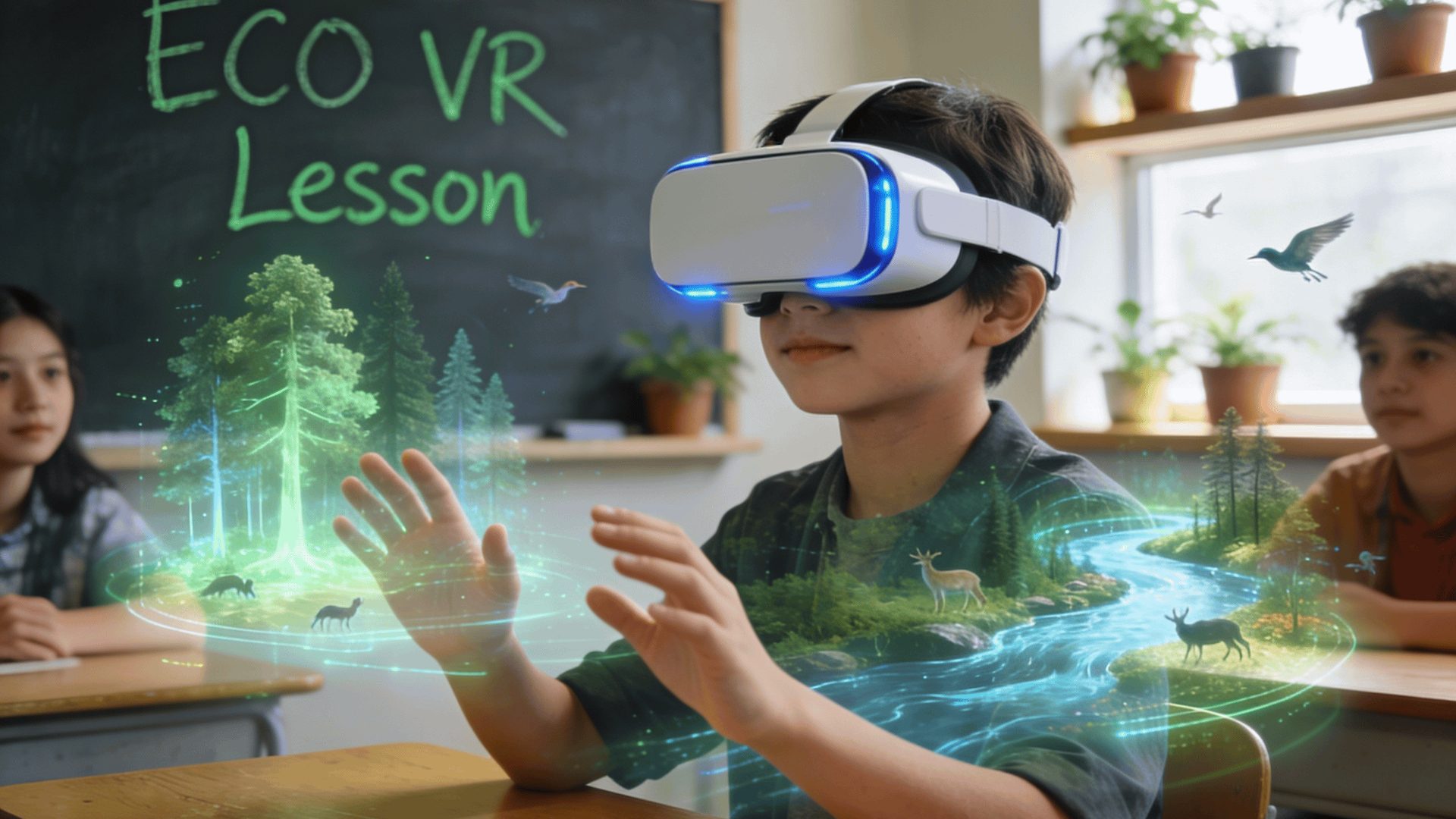
Space in VR solves it directly. The whole class pilots research vessels around the planets and moons together, in a session that fits inside a normal school morning.
What pupils will learn
The science they take away
A date on the calendar is the hook. These are the curriculum outcomes the day is built to deliver.
- 01Pupils describe the movement of the Earth and the other planets relative to the Sun, and of the Moon relative to the Earth - the core of the Year 5 Earth and space unit.
- 02Classes build a usable sense of scale: how far apart the planets sit, and how small Earth is beside the gas giants.
- 03Pupils use the vocabulary of astronomy - orbit, axis, satellite, crater, phase - in context rather than from a glossary on the wall.
- 04The class connects what they have seen to the work real astronomers do now, and to the instruments they use to do it.
What's included
One price, nothing to arrange
Everything below is part of a standard booking. Your school provides a large indoor space, a parking space to unload and a member of staff in each session.
- A DBS-checked facilitator for the whole day, leading every session across the timetable.
- A fully networked class set of VR headsets running our own space content, plus a spare, charging and cleaning kit.
- Risk assessment, public liability insurance certificate and DBS details emailed to your office on booking.
- Follow-up classroom activities covering the solar system, day and night, and the phases of the Moon.
Workshops for this date
What we can run on the day
Pick one for the whole school, or run two alongside each other in separate spaces.


Key dates
When it falls, when to book
International Astronomy Day moves with the lunar calendar rather than sitting on a fixed date, and it is marked twice a year - once in spring and once in autumn. Tell us the term you want and we will work to the date your school has chosen.
Questions schools ask
Before you book
When exactly is International Astronomy Day?
It moves each year because it is set by the lunar calendar, and it is marked twice - once in spring and once in autumn. Most primary schools pick a date in the surrounding week that suits their timetable, which works just as well.
Do we need a dark room?
No. Everything happens inside the headsets, so a normal hall in daylight is fine. You need one large, clear indoor space rather than a blackout.
Is it only for Year 5?
No. Year 5 covers Earth and space formally, so the fit is obvious there, but the workshop runs from KS1 upwards with the content pitched to the age group.
Can we run it as a whole-school day?
Yes - typically six sessions in a day, which covers Reception to Year 6 in a one-form-entry school.